
Building a house on your parent's land: how a home loan works
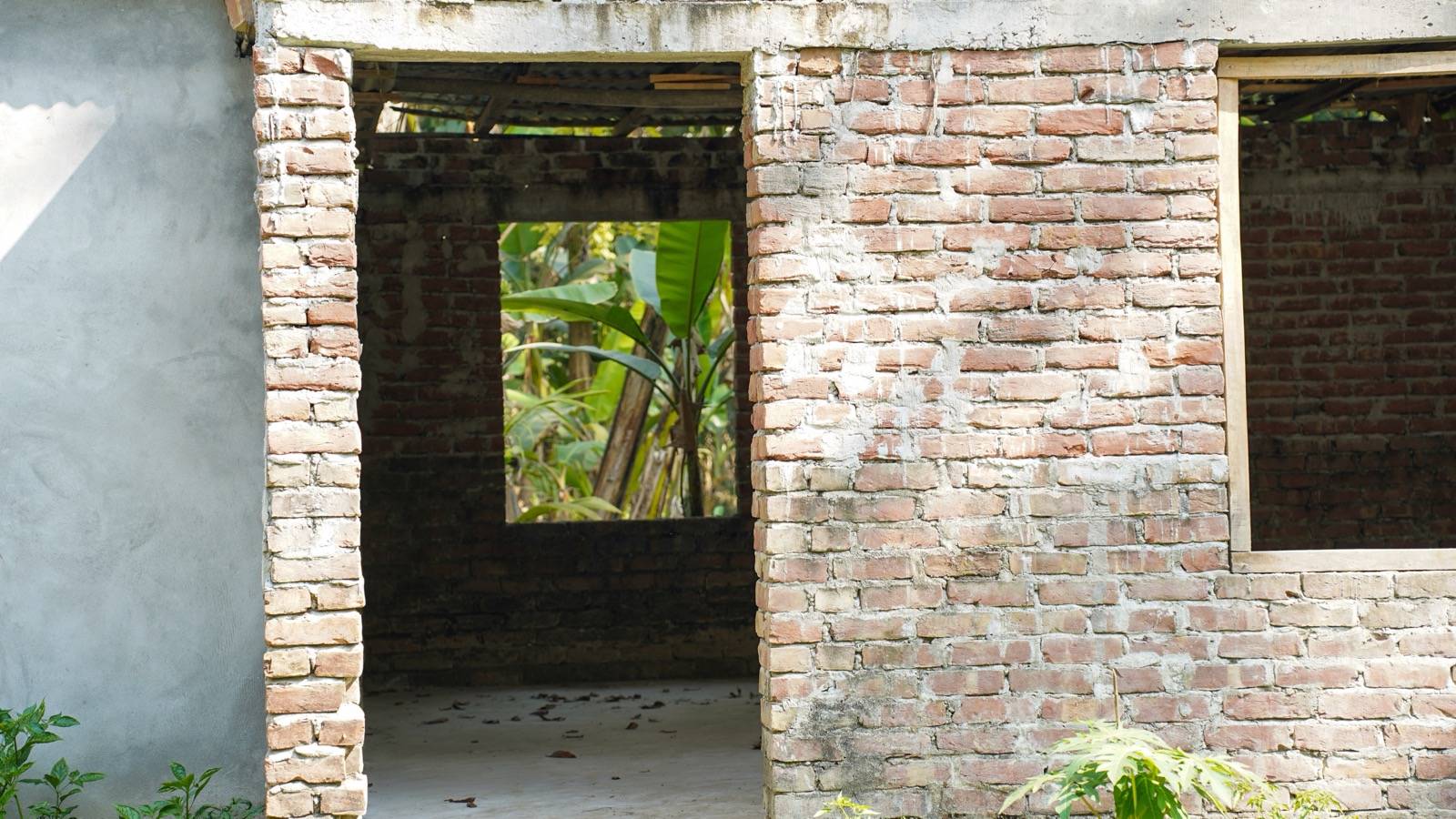
Short answer: We found no RBI rule that the land must be in your name. RBI rules want the building plan sanctioned in the applicant’s name and the money paid in stages. Each lender decides what security it accepts. Ask the lender in writing which route it accepts: your parent as co-owner and co-applicant (a second borrower), or the land gifted to you first by a registered deed.
The situation: your parent’s land, your loan
Your parent owns a plot, and you want a loan to build on it, repaid by EMI (a fixed monthly amount). It is a secured loan: the lender holds property as security.
For a loan to build on a plot, RBI rules say the lender gets a copy of the building plan sanctioned in the applicant’s name before sanction. You give an affidavit (a sworn statement) to build as per the plan and get a completion certificate within 3 months of finishing, or the lender can ask for it back. The lender’s architect certifies each stage. There is no loan in an unauthorised colony unless it has been made legal (regularised). Ask the lender whose names it needs on the land papers, plan and loan.
₹ example: Rohit builds on his father’s plot
Fictional example. The 9% rate is our assumption, not a market rate. Calculated by Paisavy.
Rohit, 32, earns ₹70,000 a month in Lucknow, where his father owns a plot. A builder estimates ₹24,00,000 for a small house. The lender counts only the building cost.
| Item | Amount |
|---|---|
| Building cost | ₹24,00,000 |
| RBI LTV cap (loan-to-value: the loan as a share of the cost), loans up to ₹30 lakh | 90% |
| Largest loan at that cap | ₹21,60,000 |
| Rohit’s own money | ₹2,40,000 |
| EMI at 9% a year for 20 years | ₹19,434 |
| Total interest over 20 years | ₹25,04,179 |
| Interest in the first full year of EMIs | ₹1,92,758 |
| Old-regime interest cap, if Rohit is an owner and builds in time | ₹2,00,000 |
The 90% is a ceiling, and a lender can lend less. RBI rules do not say whether the plot’s value counts, so ask.
Options and limits
Route 1: your parent as co-owner and co-applicant. If the lender accepts it, the land stays with your parent and the plan and loan carry both names. Ask in writing what happens to your parent if an EMI is missed.
Route 2: the land is gifted to you first. This needs a registered deed signed by the parent and attested (signed as witnesses) by at least two people. An unregistered deed does not move the land. Muslim-law gifts may follow other rules: ask a lawyer.
States set stamp duty. Uttar Pradesh caps it at ₹5,000 for gifts to listed family members, such as a son, daughter, spouse or grandchild (notification of 8 Jan 2026), but not if you gift the land again within 5 years. You pay no income tax on land from a parent, and your parent pays no capital gains tax on the gift.
Tax on the loan (old regime only).
- Interest: up to ₹2,00,000 a year on a house you live in, if building is finished within 5 years from the end of the tax year of the loan (with the lender’s certificate). Otherwise ₹30,000.
- Interest from before the house is finished: 5 equal parts from the year it is finished, within the same cap.
- Principal: section 123 (earlier 80C), within ₹1,50,000. It is taken back if you transfer the house within 5 years from the end of the tax year you get possession.
- Joint owners claim separately. Our reading: each owner who repays can claim their own interest up to the cap.
- Not an owner? It is unclear whether you can claim: tax rules give house income to the owner, and we found no official text on this. Ask a tax professional.
In the new regime, interest on a house you live in is not allowed. For interest before the house is finished we found no clear answer, so don’t count on it. Also, in the new regime a loss from house property cannot lower the tax on your salary or other income. See old vs new tax regime.
PMAY-U 2.0 runs for 5 years from 1 Sep 2024. No one in your family (husband, wife, unmarried children) may own a pucca house anywhere in India. If you are unmarried, you are part of your parents’ family, so a pucca house they own counts. An empty plot owned by a family member does not count, says the official PMAY FAQ. Its BLC part (help to build) is for incomes up to ₹3 lakh, and the applicant states that they own the land. Our reading: a parent’s land doesn’t qualify unless it is transferred. Ask your municipality.
The ISS part (interest subsidy) covers building on existing land for incomes up to ₹9 lakh, loans up to ₹25 lakh and houses worth up to ₹35 lakh. It pays at most ₹1.80 lakh. The limit is for household income. If Rohit’s ₹8,40,000 a year is the household’s only income, it is inside the limit, but other conditions apply. Its form records the land as owned or jointly owned, so ask the lender about a parent’s land.
RBI rules on every home loan. The KFS (Key Fact Statement: a short sheet of the loan’s terms) shows the APR (yearly cost with all charges). Floating-rate home loans sanctioned or renewed from 1 Jan 2026 have no prepayment charges. Complain to the lender first. After 30 days, you can go to the RBI Ombudsman within 90 days.
If an EMI is already hard to pay, see Hard to pay.
What to check today
- Whose name is on the land record and on the plan.
- Ask the lender in writing: co-owner or gift first? Does the plot count in the LTV?
- Your state’s stamp duty on a family gift deed.
- Your tax regime, and whether you will be an owner.
- The KFS: the APR and every charge.
Try it with your own numbers
→ Home loan EMI calculator: see your EMI and total interest, or try the home loan eligibility calculator. Your numbers stay on your device.
Sources and review (all opened 17 Nov 2026)
- RBI Commercial Banks Credit Facilities Directions, 2025: https://www.rbi.org.in/Scripts/BS_ViewMasDirections.aspx?id=13156
- RBI Housing Finance Companies Directions, 2025: https://www.rbi.org.in/Scripts/BS_ViewMasDirections.aspx?id=12939
- Transfer of Property Act, quoted by the Supreme Court: https://api.sci.gov.in/supremecourt/2017/37674/37674_2017_Judgement_26-Oct-2018.pdf ; Registration Act s.17, s.49: https://api.sci.gov.in/jonew/judis/37964.pdf
- UP notification, 8 Jan 2026: https://igrsup.gov.in/prernadoc/StampExamptionGO/ViewGOPDF_list_user-11.pdf
- Income-tax Act, 2025: https://egazette.gov.in/WriteReadData/2025/265620.pdf ; Finance Act 2026: https://egazette.gov.in/WriteReadData/2026/271439.pdf
- PMAY-U 2.0 Scheme Guidelines: https://pmaymis.gov.in/PMAYMIS2_2024/Operational-Guidelines-of-PMAY-U-2.pdf ; FAQ: https://pmaymis.gov.in/PMAYMIS2_2024/faq.html ; https://pmay-urban.gov.in/
- RBI KFS: https://rbi.org.in/Scripts/BS_ViewMasDirections.aspx?id=13140 ; https://www.rbi.org.in/Scripts/NotificationUser.aspx?Id=12663
- RBI Pre-payment Charges Directions (2 Jul 2025)
- RBI Ombudsman Scheme 2026: https://www.rbi.org.in/Scripts/BS_PressReleaseDisplay.aspx?prid=62052
- See also official sources.
- Education only, not legal or tax advice.
Educational information, not financial advice. Found an error? Tell us → · Corrections log
